Iron Bacteria (Iron Ochre) in Wet Basements: What Atlantic Canadian Homeowners Should Know
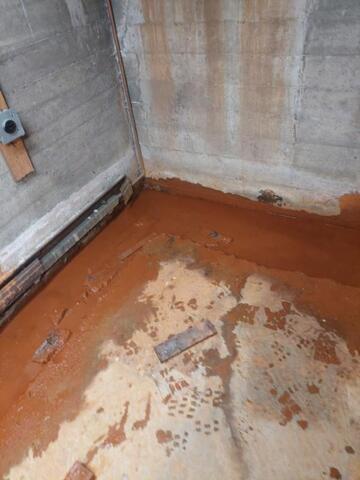
Every once in a while, a homeowner calls us at Ridgeback Basement Systems and describes something unusual in their basement. It’s not just water. It’s a thick, rusty, jelly-like slime collecting around the drain, inside the sump pump, or even staining the concrete floor. Sometimes they’ve noticed it in toilet tanks or around faucets, too.
What they’re seeing is most likely iron bacteria, commonly referred to as iron ochre.
Iron bacteria naturally occurs in groundwater throughout much of the world, including right here in Nova Scotia, New Brunswick, and Prince Edward Island. It survives by oxidizing dissolved iron and, in some cases, manganese. As it feeds on these minerals, it produces a byproduct — a sticky, gelatinous slime that’s usually reddish-brown but can also appear yellow, grey, or brown.
This slime may look fluffy or stringy, almost like wet cotton fibres suspended in water. It often has a musty, swampy smell that homeowners struggle to describe. While iron bacteria itself isn’t considered harmful to your health, it can be extremely damaging to plumbing and basement drainage systems.
Over time, iron ochre builds up inside pipes, clings to sump pumps, and coats drain tiles. As layers thicken, pieces can break off and travel through the system, leading to clogs. In severe cases, entire well systems have been known to clog within just a few months. Stainless steel components can corrode, pumps can fail, and basement drainage systems can stop working altogether.
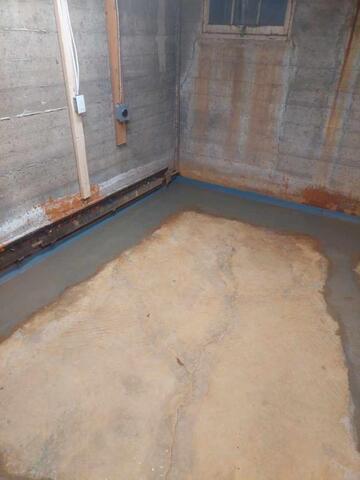
Iron ochre also stains anything it touches. Concrete floors absorb the discoloured water, leaving deep rust-coloured marks that are difficult to remove. It can ruin laundry, stain sinks and tubs, and leave an oily, rainbow sheen on standing water. Some homeowners even notice changes in the taste or smell of their water.
If you suspect iron bacteria, a simple at-home test can offer clues. Fill a glass with tap water first thing in the morning before running any taps. Let it sit undisturbed for 24 hours. If you see fluffy, three-dimensional reddish sediment or strands that resemble cotton fibres, iron bacteria is likely present.
Unfortunately, chemical treatments marketed as solutions are often expensive and temporary. Because iron bacteria is naturally occurring in groundwater, eliminating it entirely is rarely realistic. The better approach is designing a drainage system that can handle it properly from the start.